Wednesday 28 May 2014.
There is something I just have to get clear about in my head regarding this 'who owns the finds' we make while out metal detecting. This debate has been going on awhile now over on other blogs, After weeks of it no sooner I think I have it sorted in my head, I then read something else that throws me into chaos again.
I keep reading the farmer who is the landowner owns the finds we make, as we found them on his land.. ..OK, I accepted that, especially when I read ''Under English law a landowner has sole title to any archaeological artefacts found on his or her property'. Now you would think that's sorted, but then I read that the farmer is not the true owner of the land. Apparently all land in England is owned outright by the Crown. The Crown can take back the farmer's land anytime it chooses, so in fact these farmers only lease the land. The Crown also has stated what they want us to do with any finds we make, They only want anything that is classed as treasure, anything else they would like us to record voluntary with the PAS via the FLOs, which they set up. Its a good system and we are lucky to have this system in our country.
So what's the problem, to me everything is running ok. The latest thing the anti-detecting bregade has come up with is what they are calling a 'Finds Agreement Contract' with the farmer, where the farmer has to sign a finds release form. WOW, the farmers that I know, which is not many mind, such a thing would frighten the life out of them. Way to official in my opinion and will scare them off. They also want us to tell the farmer when we arrive to detect, and also when we leave. On top of that they want the farmer to follow us around all day looking over our shoulder to make sure we don't hoik anything. The object of this is to try and stop the nighthawking that goes on....yeah, like that would stop it.
I even landed on a Religious site where they said God owns all the land.... wow, be a job trying to get permission off him, and how would he sign a finds release form?
So, all that rambling above is just a brief note. What I want to know is who really truly, clear as a bell, no fobbing me off...owns the land. As I say, I keep reading its the farmer, but then I find out its not, its the Crown. I keep reading all the finds, except treasure, belongs to the landowner/farmer, but if the crown owns all the land then it must belong to the Crown, and the Crown as I said above have laid down rules and laws regarding finds.
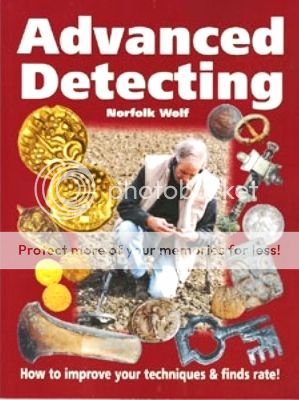
I came to write this post because last night I was reading one of my detecting books and came across a section where the author had wrote about this very issue a few years back. The book is called 'Advanced Detecting', How to improve your techniques & finds rate, by the late Norfolk Wolf (John Lynn). An excellent book and a must for all detectorists who wish to improve his or her skills wrote by a master of metal detecting.
The piece the Norfolk Wolf wrote about relating to the issue at hand here was titled 'Finder's Keepers'. I found it an excellent piece, well written, very thought provoking and would like to share it with you. I would also like to thank Greenlight Publishings for their kind permission for letting me quote the below writings by the Norfolk Wolf.
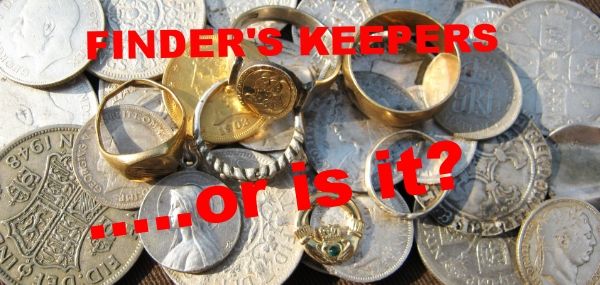
FINDER'S KEEPERS.
"Nobody has to tell me how hard detecting can be at times and when I find a coin or whatever, I know that I've earned it. However, here's the rub: is it really mine?
In my eyes yes; if it wasn't for my diligence it would still be there, lost forever. Does the farmer really have title to it? The land might have been in his family for generations, but how was this acquired?
The amount of land that was forcibly taken from the commoner by those in power to line their own pockets is unbelievable. When William I conquered England, he gave his butler thousands upon thousands of acres. A butler? For crying out loud.
For me this was particularly unjustified, as not only did he just get the land but also the people who resided there. These poor unfortunates were then promptly taxed to boot!
However, if one of them had dropped a coin, some of the tax had already been paid to the landowner. So by what right does a future landowner claim title to what I find?
Suppose it was a small hoard belonging to a Royalist that was hidden when the news arrived of Roundheads in the vicinity; in the ensuing fight he dies. Who does the money belong to, his family or the landowner?
TREASURE TROVE.
This came about as an excuse to raise capital rather than preserving antiquities. When Queen Elizabeth I was down to her last few coppers, she passed the law that any gold or silver found buried belonged to her, or as we now say the Crown.
What I do know is that my finds are all recorded, whether gold, silver, bronze or pottery. Although the finds are mine, the information belongs to the museum service which in turn belongs to the country.
No matter what my thoughts, I have to abide by the laws of Treasure and I always have an agreement with the farmers on a fifty-fifty basis.
Without their permission I wouldn't have the chance to make the finds.
I find myself hoping that I could make more finds on the smaller landowners' fields. These people are really struggling in today's economic climate and they deserve any help that they can get.
The undeniable fact that detecting has advanced the country's historical database with a vast variety of objects and coins hitherto unknown, needs no further argument.
However, I am in agreement with archaeologists over nighthawking. These people are thieves pure and simple, and a plague on the detecting fraternity as a whole. They have no interest in the historical aspect of their finds, only gain. Whatever form of legislation was introduced I don't think it would stop them.
Other detectorists need to do their bit to engender good relationships with their local museum service. Its all very well wanting a coin or object identified, but next time how about taking some of the pottery that you've been walking over with a grid reference? This will help the service far more than an odd hammered coin that was a chance loss, and they will appreciate the trouble taken".
(c)2005 John Lynn.